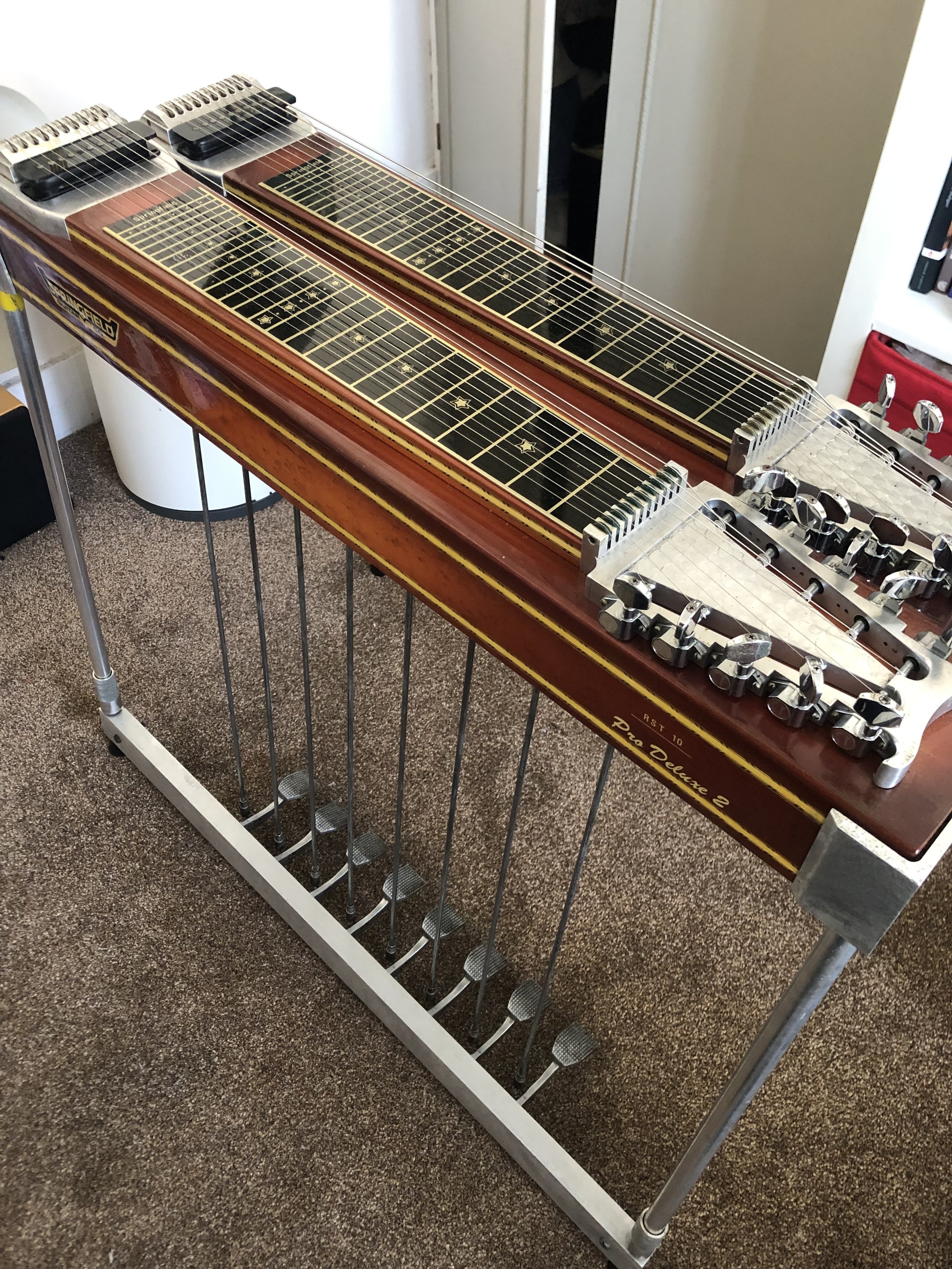
Springfield Guitars were hand-made in Livingston and Greenock, Scotland in the early 1980’s. The pulls were adjusted by balancing the pedal or lever throw with the threaded pullers (similar to the Blanton system which forgoes endplate tuners in favour of tuning nuts on the pullers which simultaneously adjust the distance of the pull rod connection from the body).
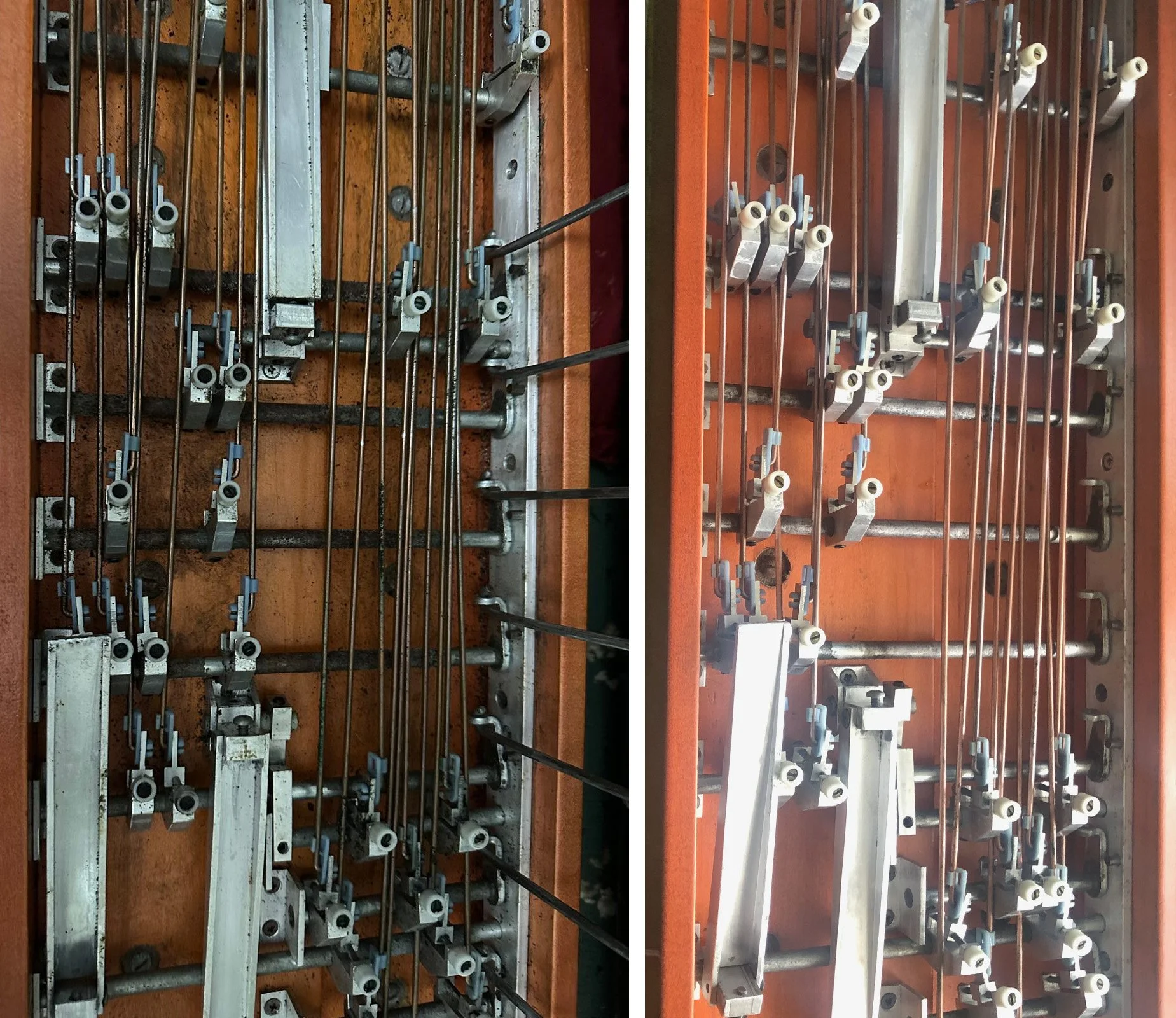
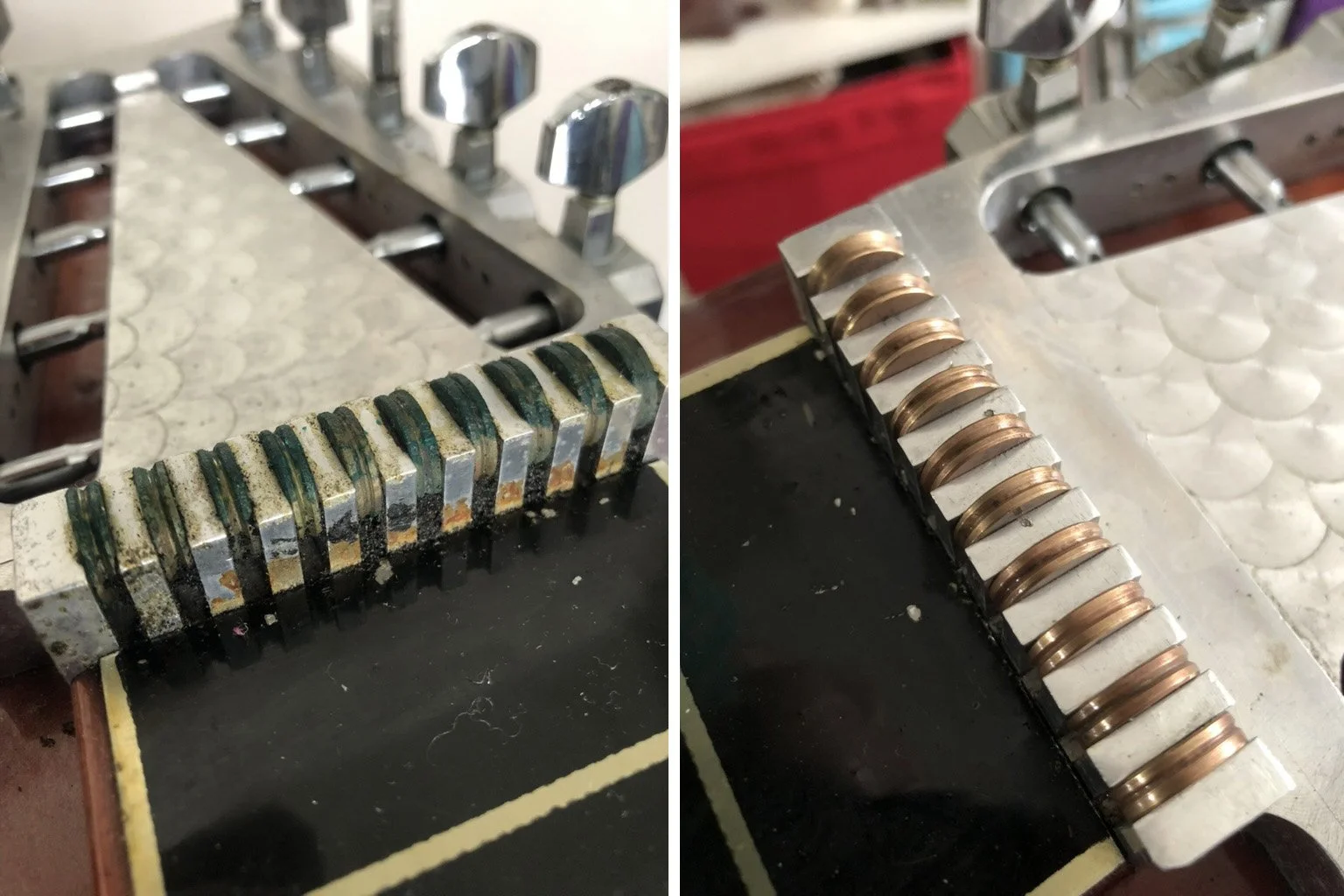
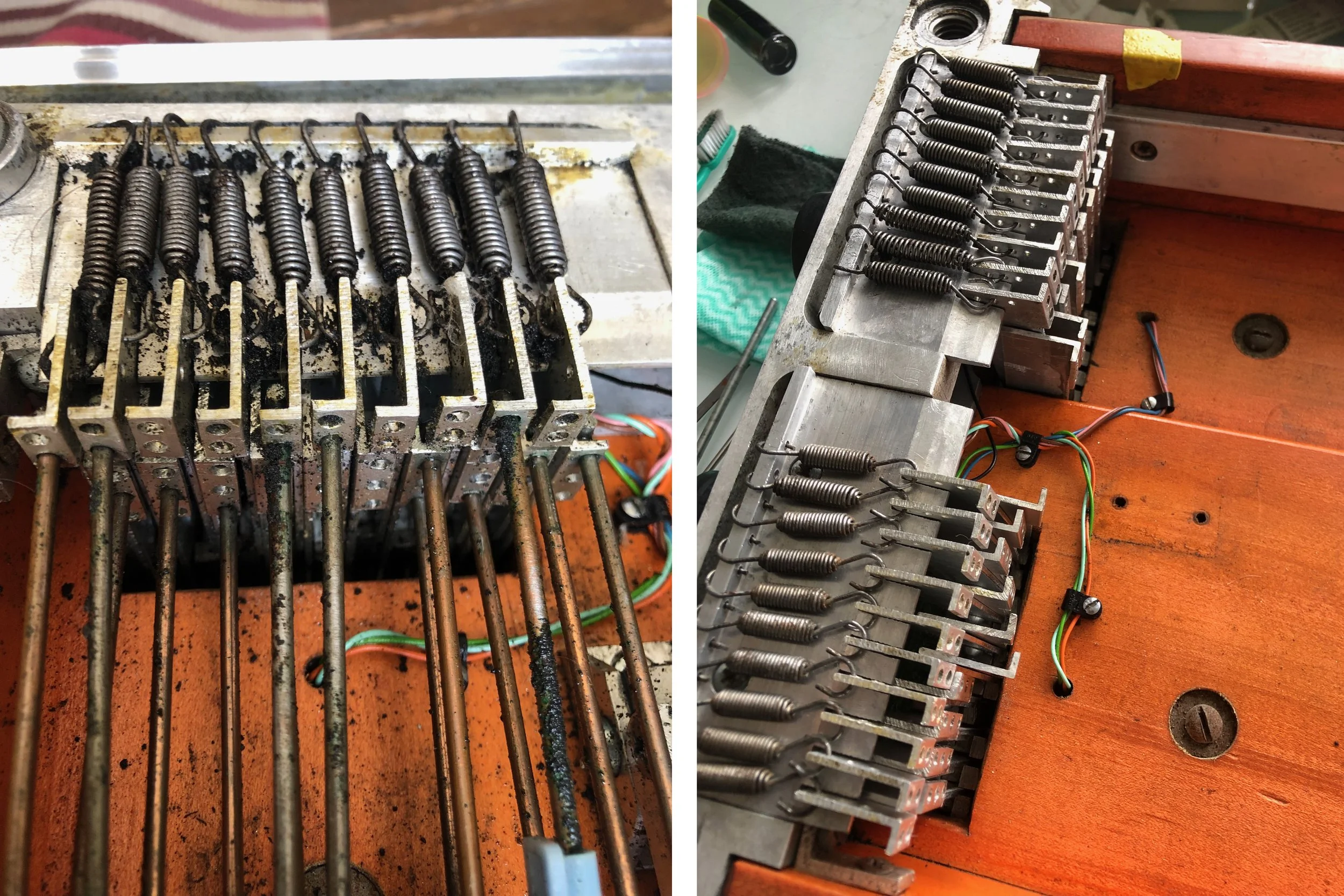
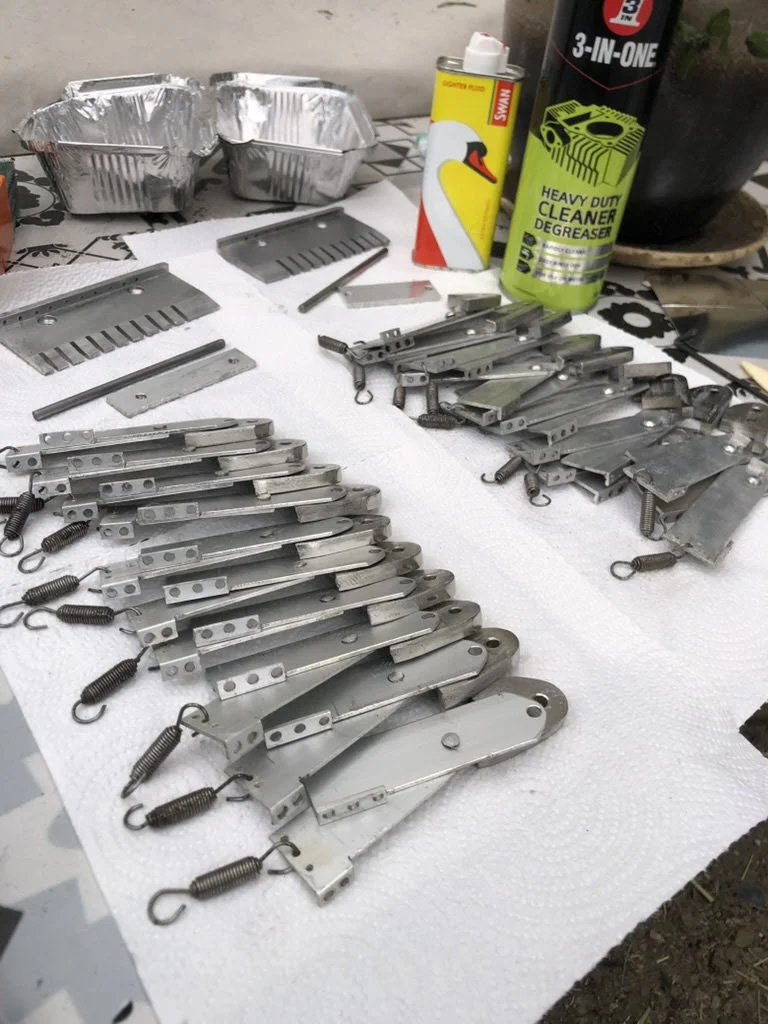
This guitar was brought to me covered in disintegrated case-foam, dirt, grease build up and corrosion (the latter affected most of the cross rods and nut rollers but little else). Despite this there was little sign of playing wear. I decided the best way to clean up the mess was disassembly of everything apart from the necks and endplates. I treated all the metal parts with degreaser and naphtha, removing surface corrosion where possible and reassembled with minor copedent changes to the C6th neck and a Day to Emmons conversion on the E9th. One extra pull rod was required with 90 degree bends in each end so I fashioned one from welders rod. Some of the crossrods needed a little help to rotate freely so I carefully sanded behind the axle brackets where necessary.
Having set up the tuning by balancing the pedal or lever throw with the threaded pullers I realised the pedal bar was slipping but this was resolved with the addition of extra compression olives inside the clutch of the front legs, allowing the pedal bar to be seated snugly between clutch and rubber foot on each side. I added a small amount of white lithium grease to each leg socket and finally polished the visible metal with Simichrome and the wood with Nomad One.
This was a rewarding guitar to work on with a different rodding system from most, making copedent changes relatively painless. It has a unique bright tone with strong output from the pickups and a resonant solid maple body.